Showing posts with label Star Wars. Show all posts

Wednesday, 7 August 2019

MBTI: Why Bold and the Beautiful's worst ever storyline is like the Spiderman Clone Saga


 I. Bold and Spiderman


In past posts, I have compared the world's most popular soap Bold and the Beautiful (1987-) to a comic book, and recently, while watching an excellent video by Comic Tropes on Spiderman's famous Clone Saga story arc from the nineties, I was struck by the parallels between one of the sub-plots of the Spiderman story and the current main plot of Bold and the Beautiful.

In the Clone Saga, Peter Parker's wife Mary Jane Watson, carrying Peter's child, miscarries - or so she thinks. The truth is that, after blacking out in hospital, Mary Jane has given birth to a healthy child which is stolen from her by the supervillain Norman Osborne (the Green Goblin). On waking, she is told that she has miscarried. As to what happened to the child - after being abducted, it is placed in the care of an evil nanny, and is never heard from again; it disappeared from Spiderman continuity.

The writers and editors of Spiderman at the time may have decided to ditch the child abduction storyline because of an adverse fan reaction: the Clone Saga had proven to be highly unpopular with Spiderman readers, and so, in order to prevent any further alienation of the Spiderman fan base, Marvel opted for discarding the child abduction plot. Thereafter Marvel pretended that it had never happened.

Marvel probably made the right choice. But supposed it hadn't? Suppose it had persisted with it, and, to rub salt into the wound, focused on nothing else but Peter and Mary Jane's grief for an entire year? In this 'grimdark' iteration of Spiderman, the traditional Spiderman superhero fare - fighting Doctor Octopus, the Vulture, the Green Goblin - is neglected, and the readers are treated, over and over, to the sight of Peter and Mary Jane sobbing over their (presumed dead) baby's ultrasound photos. Because of the tragedy, Mary Jane and Peter divorce, and the baby winds up in the hands of one of Peter's ex-girlfriends (maybe Felicia Hardy or Liz Allen or Betty Brant or a reincarnated Gwen Stacy), who, having no idea that the baby belongs to Peter, adopts it (after paying a hefty fee) and raises it as her own. Not knowing that her baby survived, Mary Jane spirals into a depression and descends into madness - and becomes so crazy that, by the end of the arc, she becomes engaged to a supervillain. Meanwhile, Peter, in search of a family to belong to, ends up moving in with his ex-girlfriend and her adopted baby. Desperate to resume her relationship with Peter, his ex-girlfriend tells him that he should consider the baby to be 'his'. (Irony of ironies!)

As stated, the traditional Spiderman themes - superheroing and crimefighting - are to take a back seat in this storyline. To make matters worse (in the eyes of the fans), veteran characters such as Flash Thompson, J. Jonah Jameson, Robbie Robertson, Aunt May, Harry Osborn, are sidelined, and new, inconsequential supporting characters take their place. The new characters (interns at the Daily Bugle?) purport to be Peter and Mary Jane's friends, but one by one, discover the fate of the baby - and resolve to keep it a secret from the couple. Mary Jane and Peter mustn't know because, 'It is for the greater good', 'The baby went to a good home, after all', 'Peter and his ex are happy with their new family', 'If Mary Jane wants to break up with Peter and marry a monster, it's her own decision - she's an adult'. Later, the excuse becomes: 'We've kept the baby-napping secret for such a long time, we could all go to jail for not telling the police'. In effect, the new characters who are privy to 'the secret' blackmail each other into keeping quiet. In addition, as a quid pro quo, Norman Osborn bribes them with money.

The story concentrates on the minor characters to the exclusion of all others (except for Mary Jane and Peter), and the minors engage in endless debate as to whether or not to reveal 'the secret' and repeat, ad nauseam, the same arguments, the same catchphrases.

All of this would be met with hostility from readers, on the following grounds:


  • The usual fun and bright tone of the Spiderman series has been replaced with a dark and serious one. Most people don't enjoy reading stories about grim subjects - miscarriage and a woman's descent into post-partum depression. Spiderman readers buy the series because they want to see Spiderman do superheroics - e.g., battle Doc Ock, Electro and Mysterio, and thwart bank robberies.


  • The fact that the baby nappers (Norman Osborne and his gang) and their accessories after the fact (the minor characters) got away with their crimes offends the readers' natural sense of justice. The wrongdoers benefit from the crime while Peter and Mary Jane suffer: immorality is rewarded and goodness is punished.


This hypothetical Spiderman baby-snatch storyline follows the current Bold storyline to a tee. The story on Bold has gone on for eight long months - a record for Bold - to the exclusion of all others on what is usually a multi-storyline show. A grim tone now pervades what has always been a light, fluffy, camp and colourful TV series, and the central theme of Bold - the fashion industry - has been cast aside, as have veteran characters. The budget has been cut to the bone, and only a few sets - and a few actors - are used, over and over. Minor, new characters, have come to the fore. Longtime Bold watchers have been forced to endure them and their extraordinarily repetitious dialogue (which has been virtually the same day after day). Because of the change in tone, subject matter and characters (some of whom are acting out of character), Bold fans are leaving the series in droves, and while many fans may disagree as to which character is their favourite, all of them are united in hatred of the baby snatch storyline. And the makers of the show seemed to be oblivious to this. It is only recently that they show signs of waking up: they are bringing the baby snatch storyline to a juddering halt, and are wrapping it up prematurely, finishing it in August when they intended to string it out until November.


II.  Some background, some MBTI

Bold and the Beautiful revolves around two families: the Logans, a working-class family from the Midwest, who move to Los Angeles, and the Forresters, a wealthy Californian family (also originally from the Midwest) who run a fashion house called Forrester Creations. A third, smaller family, the Spencers - who run a publishing conglomerate, Spencer Publications - interweaves with the two main families.

This YouTube video gives a quick summary of the entire Bold saga, and the intermarrying and intercoupling of the three families, in six minutes. It covers the years from 1987 to 2008.

The above may make Bold seem complicated, but Bold really does make it easy for the viewer to understand what is going on. For one, Bold colour-codes the families for your convenience. You will notice that most of the Logans are blonde:


Ridge FORRESTER, the hero of the show, for most of the series is caught between two women - Brooke LOGAN, who is blonde, and Dr Taylor Hayes (née Hamilton), who is brunette. The family Ridge has with Taylor is brunette:


Hairstyle and accessories help differentiate a family as well. Bill Spencer II, the head of Spencer Publications, wears a goatee and so does his son, Liam. Two of his sons wear dagger medallions.


The Bold series shows a remarkable stability: four leading characters were played by the same actors for the first twenty-five years. During that time, two wilful and passionate women stood at the center of the Bold saga: Brooke LOGAN and Stephanie FORRESTER.


Brooke LOGAN leads the Logan family, which is from the beginning of the series female-dominated. In the first season, five of the family members are female and only one is male; the father - Stephen LOGAN - is absent, and has been absent for some time.

Brooke, an earthy, womanly and nurturing type, is portrayed as a slave to her passions - she has five children by four different daddies. I type her as an ESFJ.

Stephanie FORRESTER, mother of four children, leads the Forrester family. She is married to the gentle, dreamy and vacillating fashion designer Eric FORRESTER, who leaves her not once, but several times, for a woman who is much younger.  Each time Stephanie swears vengeance. Stephanie displays all the worst qualities of an ENFJ villain character: she is brooding, vindictive, controlling,  manipulative, bullying, temperamental, waspish and, in the words of Brooke, 'cruel'.

The rivalry - or enmity - between Brooke and Stephanie lasts for twenty-five years (Stephanie dies of cancer in 2012). Stephanie disdains Brooke, not only because Brooke marries Eric and bears him two children, but because Brooke marries Stephanie's two sons, Ridge and Thorne FORRESTER, as well. (In Bold, romantic partners are shared by father and son, brother and brother, sister and sister).

Brooke and Stephanie's personality types share the same leading function - Extraverted Feeling (Fe). Two types who share the same dominant function enjoy what Socionics calls a Kindred relationship.

The other long-standing rivalry, between Taylor Hayes and Brooke LOGAN, is called the 'Triangle of Doom' by Bold fans. Taylor, a psychiatrist, therapist and counselor, has for years competed with Brooke for the same man - Ridge. Taylor, who is somewhat unbalanced mentally and is forever catastrophising, sees herself as a downtrodden woman who is forever being taken advantage of. I type her as an ISFJ.


(Brooke, an ESFJ, and Taylor, an ISFJ, share the same personality functions but in a different order. The two types stand to one another in what Socionics calls a Mirror relation).

Since the 2000s, Taylor invented a narrative - which she repeats to all and sundry - that Brooke is a homewrecker who broke up Ridge and Taylor's marriage and stole Ridge. This reverses the truth: Taylor broke up Brooke's marriage, not the other way around. In 2002, Taylor dies (in what was the third of her three 'deaths' in the series - as in Marvel comics, death of a character is not forever) and Brooke is left to raise Taylor's three children by Ridge. After coming back to life in 2005, Taylor takes back Ridge (after thanking Brooke for helping raise the children), but soon cheats on him by kissing fireman Hector Ramirez. Because of this, and because Taylor confessed to a past infidelity with Dr James Warwick, Ridge leaves Taylor, who then plunges into an affair with Ridge's brother, the recently widowed Thorne FORRESTER. (Thorne's wife Darla died after being run over in a hit and run incident; the driver of the car was - Taylor).

Brooke's rivalry with Taylor, Taylor's narrative that 'Brooke wrecked my family with Ridge', Taylor and Stephanie's shared pathological hatred of 'The Logans', lit the fuse of the current baby-napping storyline - as we shall see.

III. Into the 2010s

In the next phase of Bold - after the 2000s - we meet the next generation of Logans, Forresters and Spencers. Brooke and Taylor's children from the 1990s, Hope LOGAN and Steffy and Thomas FORRESTER, reach adulthood, and Hope and Steffy go on to repeat their mothers' Triangle of Doom. You'll notice below that Hope (a Logan) is blonde, Steffy (a Forrester) is brunette:


What are the pair's personality types? Hope, a dreary, by the book martinet, turns her fashion line 'Hope for the Future' into a morality campaign, the objective of which is to persuade young women to save themselves for marriage. Because she practises what she preaches, her relationships with Oliver Jones and then Liam SPENCER suffer. Her sexually-frustrated fiancé Liam becomes an easy target for the predatory Steffy. I compare Hope to the Vulcans on Star Trek and type her as an ISTJ (like Spock).

Steffy, a vivacious, forceful, headstrong young woman, I type as an ESTP. (She reminds me of Lois Lane, another ESTP ). At the time that the adult Hope arrives on the scene, Steffy begins a relentless campaign to drive the Logans out of Forrester Creations. To that end, she lies, manipulates, bullies and seduces. She tries to steal Hope's boyfriend Oliver Jones and then Katie LOGAN's husband Bill SPENCER II (Katie is Hope's aunt). Failing both times, she succeeds with Hope's new fiancé Liam SPENCER (Liam is the son of Bill).

What are the relations between the ISTJ and ESTP types? Socionics calls them Contrary or Extinguishment relations. And on that note, there is another famous Contrary, ESTP-ISTJ pair: Captain Kirk and Mr Spock.

The overbearing and sanctimonious Hope and the dynamic and beautiful Steffy go to war over Liam, who, like Ridge before him, could be accused of vacillating - and playing the two women against one another (at least unconsciously). And so the second Triangle of Doom begins. Both women end up marrying Liam several times. Eventually, Hope, tired of Liam's lack of commitment (at some level, she senses that Liam isn't really into her), turns to Liam's half-brother Wyatt Fuller-SPENCER. She ends up marrying Wyatt in fit of pique with Liam (after Liam turns up ten minutes late for an appointment!) and becomes pregnant, but miscarries (in tried and true soap opera fashion - she falls down a flight of stairs). It is then the actress who plays Hope, Kim Matula, leaves the series.

IV.  A New Hope

Did that mean the end of the Hope Logan character? Not at all: after a few years, Hope was recast. And - as often happens when a character is recast - the personality type of the character changed.

In 2018, Liam had remarried Steffy just as his father, Bill Spencer II, was embarking on what is called in wrestling the 'Heel Turn': that is, Bill shifted from being a hero to a villain. After weeks of mutual flirting, Bill and Steffy enjoy a one-night stand. Remorseful, Steffy returns to Liam but keeps the encounter a secret, and the blissfully ignorant Liam renews his wedding vows with Steffy that same evening. Later, she takes a paternity test in secret (the child is proven to be Liam's) but Liam discovers the test after Steffy accidentally leaves the results hanging out of her purse. Shattered, Liam leaves Steffy and moves in to a roach motel. It is there that the new Hope, played by the lovely Annika Noelle, finds him - and nurses him through his trauma.

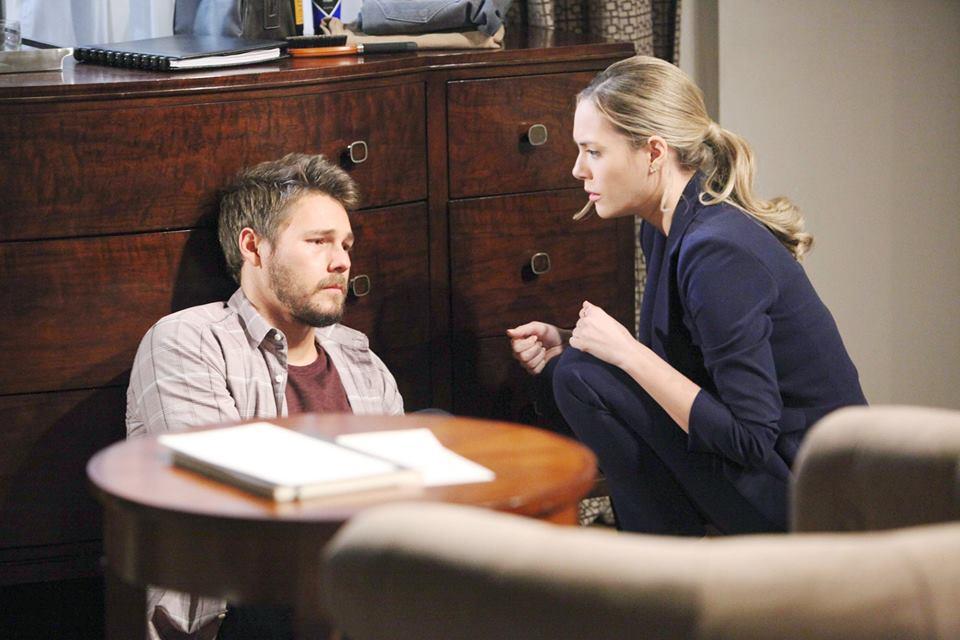


Hope's type has been change from a drab and humourless ISTJ to a warm and nurturing ESFJ, and we understand perfectly why Liam gravitates towards Hope and abandons Steffy. The 'Lope' relationship (the Liam and Hope relationship, as it is called by Bold fans) starts again but this time with a clean slate, as if Hope were a brand new character (which she is). 

Liam annuls his marriage to Steffy and becomes engaged to Hope - but, bizarrely enough, breaks off the engagement after he is persuaded to return to Steffy, who in the mean time has given birth to a girl, Kelly (named after Liam's deceased mother). Trouble comes in twos in soaps, and it turns out that Hope has become pregnant too. Hope and Liam marry, and at this point, tragedy strikes.

Taylor has returned to Los Angeles from one of her periodic absences, and is filled with fury that 'The Logans' have won again - that Hope LOGAN, daughter of Brooke LOGAN, has succeeded in winning Liam once again from Steffy. For whatever reason, Steffy has decided on having another child - a sibling for Kelly - and is expressing a desire to adopt. Taylor meets and has an affair with a gambling addict and crooked doctor, Reese Buckingham, who owes money to loan sharks who are threatening his and his daughter's lives. Taylor lets slip that she's prepared to pay big money for a baby for her daughter.

Liam and a heavily pregnant Hope prepare to travel to the resort island of Catalina. Liam misses the plane because - on Hope's insistence - he is to attend to his sick daughter, who is being looked after by Steffy. Storms and a blackout hit the island, and Hope goes into labour and gets taken to a deserted hospital where the only doctor on duty is - Reese Buckingham. In a grueling and nightmarish scene, Hope delivers a baby and passes out, and wakes up to find Liam (who has made his way to Catalina through the storm) by her bedside. The child was stillborn, Liam tells her, and Dr Buckingham hands them the baby's corpse. Liam and Hope hold it and collapse sobbing. The producers of Bold, for the show's 8000th episode, gave us one of its gloomiest ever.

V.  The Babynapping

In this episode and subsequent ones, the veteran Bold viewer will pick up on a few clues and begin to suspect that all is not as it seems; he may begin to wonder if Hope's baby may have somehow survived and the writers are steering Bold towards a classic baby-swap storyline. The changeling story - where one baby is stolen, or substituted for another - runs through the history of soaps like a motif.

Our suspicions are proven correct when it is revealed that Dr Buckingham switched Hope's baby Beth with the stillborn baby of another woman patient at the Catalina hospital that same night. Buckingham solicits the aid of an accomplice, Flo Fulton (a casino dealer from Las Vegas), to pose as a birth mother to the kidnapped child, who is sold to a gullible Taylor and Steffy for $250,000. ($50,000 goes to Flo as a payment for services rendered, the rest goes to the loan sharks).

The show takes a dark tone as Liam and Hope's marriage falls apart and Hope descends into an almost suicidal depression. She tells Liam to give up on her and go to Steffy, who is now the single mother of two baby girls and is dangling in front of Liam the prospect of a ready-made family. The subtext of Steffy's actions is, 'Why be with a woman who has suffered not one but two miscarriages when you can be with a woman who has two adorable little baby girls?'. Steffy keeps on telling Liam, over and over, that he is the 'father' of the little girl she has adopted (Steffy has named her Phoebe, after Steffy's deceased twin sister, Phoebe FORRESTER), that he should treat Phoebe as his own...

Steffy's brother Thomas FORRESTER returns to the series, and is recast. Just like Hope's, the character's personality type changes as a result. The new Thomas - the fourth adult version of the character - exhibits all the attributes of an INTJ bad guy: he is brooding, manipulative, dark, controlling - all in all, a stock villain type and a master planner, like Star Wars' Palpatine. This marks a dramatic change in Thomas. In his previous incarnations, Thomas showed moral lapses; in his latest, he becomes the soap's villain.


Thomas comes back to Los Angeles from New York after his partner, Caroline SPENCER (Liam's cousin), dies off-screen. Thomas has been left alone to raise their child, the five-year-old Douglas FORRESTER. Looking for a new wife, Thomas becomes obsessed with Hope, and putting on a mask of sorts to attract her, he plays the grieving widower part to the hilt. Hope, meanwhile, develops an attachment to the boy, and soon treats him as a substitute for the child she has recently lost. Hope - who is steadily becoming more and more crazy - becomes convinced that she must marry Thomas for the sake of 'that poor little boy' and that Liam must return to Steffy to be a 'father to the girls'. (This line of thinking is encouraged by Thomas, who pulls off plenty of tricks to gaslight Hope into marrying him).

Flo Fulton remains in Los Angeles after the baby has been adopted, and in quick succession, four (!) other new minor characters discover the truth about the baby swap. They engage in endless debate as to the rightness or wrongness of withholding the truth from Liam and Hope. Suffice to say, the truth is never told, as that would bring the story to a close.

The message of the storyline - and perhaps this is not one that the writers and producers intended - is that immoral behaviour is rewarded. The minor characters benefit by keeping quiet, Steffy gets her ex-husband back, Thomas gets a new wife. (Thomas becomes one of the people who discover 'the secret', and resolves, naturally, to keep that information to himself). Hope and Liam, meanwhile, are - like the Stark family in Game of Thrones - punished for their goodness.

VI. The end?

For eight long months, and a 150 episodes, the series has focused on the baby swap storyline. Normally, two or three storylines run in Bold simultaneously, and each of these is wrapped up fairly quickly. But this hasn't been the case here. All characters aside from Hope, Liam, Steffy, Thomas and the new, minor ones have been relegated to walk-on roles (if they are to appear at all), and the story has hardly moved on since the 8000th episode. We the viewers are subjected to the same conversations, day in, day out, regarding 'the secret', 'the girls Phoebe and Kelly', 'that poor little boy Douglas'. (The budget axe must have hit the show hard, as all these conversations take place at the same limited number of sets and actors). None of the characters appear to do any work, and the business side of Forrester Creations has been forgotten completely - in fact, it wouldn't surprise me if the company in this time has gone broke.

The two themes of the past eight months - miscarriage and post-partum depression - touch a sore spot for many of the show's viewers, particularly women, and it is here that the writers have displayed a remarkable insensitivity. The story could have been better handled if the phony miscarriage had been dropped down the memory hole as soon as it had happened, just as the writers of Spiderman did the same with Mary Jane Watson's. The characters could have then been moved on to something else.

The writers also missed an opportunity by not revealing the truth of baby Beth's abduction (and sale) until the last minute. Flo Fulton's character could have been taken at face value as the when she first appeared as the baby's birth mother; the audience did not need to be let in on the baby-swap scam straight away. But the writers instead took the same route as the old detective show Columbo, in which the identity of the murderer in every episode is known from the outset (see 'Inverted detective story').

But now, at last, the eight-month baby swap story has come to an end. The writers may have finished it sooner than they would have liked, but at some point, the makers of the show came to the conclusion that the series could not survive after alienating the loyal fanbase to such an extent. Were it that today's publishers of Marvel had such wisdom.

Mark Hootsen signing off.


Friday, 25 December 2015

Star Wars: The Force Awakens (2015) - Review and MBTI


***************************************************************************
SPOILERS AHEAD! YOU'VE BEEN WARNED!
******************************************************************************

I don't go to the movies any more - in fact, the last time I went and saw a film at the cinema in 2009 - but I felt compelled to go to an actual cinema and see Force Awakens (2015). I didn't regret the experience, but found some parts of cinema-going painful. The movie was scheduled to start at 10.00 am but didn't start until I had watched 25 minutes worth of advertisements and trailers. I found that annoying. On top of that, the trailers seemed  loud and assaulting. The trailer for Warcraft (2016) hit me on the head like a hammer, and seemed to design knock the audience unconscious...

So, how does Force- stack up against the other movies? Does it beat the much-derided prequels in terms of quality? Not really, in some ways (e.g., plot originality) it compares badly to the prequels. More on that in a moment.

I don't think that the prequels are all that bad. Certainly, casting the boy actor Jake Lloyd as Anakin Skywalker in Phantom Menace (1999) seems like a huge error - the budding romance between the prepubescent Lloyd and the 18-year-old Portman just doesn't seem, ahem, right. As well as that, the overuse of CGI in the prequels dates them badly and makes them look like the (now) old and shopworn computer games of that period. As for the charges of bad acting - especially against Hayden Christiansen - well, these are Star Wars movies. Pauline Kael's remark - in her review of Star Wars (1977) - that Hamill, Ford, Fisher, et al., come from the 'Ricky Nelson' school of bad acting - reminds us that Star Wars actors shouldn't be held to the same standards as a Al Pacino, Robert De Niro, Meryl Streep or Jack Nicholson. I can overlook any shortcomings in Christiansen's performance, and I'll say this in defence of the prequels: at least they were about something. You could argue that they were a religious or political allegory (or both, which I think they were). I'm not quite sure what the theme of Force- is. Is it: bad consequences follow when baby boomer parents abandon their children?

To return to the subject of plot originality. You find quite a lot of rehashing in the prequels in the little touches here and there: amputations by lightsaber; Jedis drawing lightsabers towards them by telekinesis; Jedis and Sith opening doors, or moving heavy objects around, by telekinesis; people falling into chutes; people landing safely in spacecraft at the end of said chute... Overall, though, we hadn't seen the story of the prequels - the fall of the Republic and how it came about - before. In Force-, however, we find a recycling of the plot of Star Wars to a comic degree.

That aside, all seven movies look just great and will endure. I remember being disappointed in Return of the Jedi (1983) when I was a kid, but seeing it now, I think it represents the cutting-edge of eighties production design and craftsmanship. While the acting and characterisation doesn't seem as good as in Empire- (1980), certain of the action sequences - such as the hoverbike chase on Endor - are executed superbly. Likewise, Force- is well done: I give it top marks for production (the monsters look wonderful), choreography (dog fights, lightsaber duels), cinematography (the scenery looks spectacular).

Let's move on to the MBTI. The ubiquitous Taylor has managed to do the MBTI for every major character in the first six movies, and you can find the list of all the MBTI profiles (including C3PO and Chewbacca!) here. In today's article, I'll give my initial typings for the new characters. Good guys first:

REY - ISFP


I don't think that there can be any argument against this one. Rey gives us another instance of 'warrior female good with melee weapons (swords, bows and arrows, staves)' trope (I should add here, graceful and elven warrior female). She shows great proficiency with machines and equipment - which makes us think, at first, that she's a Ti-dominant type (an ISTP or INTP). But she doesn't show us the amorality which can crop up in the ISTP or even the INTP type. In socionics, Fi enables strong moral judgements, evaluations, and gives rise to strong feelings of sympathy or alienation. She saves BB-8 from the Teedu scavenger out of pity and tells the Teedu - and uses force - to leave the BB-8 alone: Fi (morals) and Se (force together). She refuses to sell BB-8 to Unkar Plutt for 'sixty portions' out of a recognition of BB-8's potential worth. Likewise, she feels compelled to confront the First Order, and not flee (like Finn), out of moral reasons. Definitely an Fi dominant type.

POE DAMERON - ESTP


The suave, smooth, well-dressed, ultra-confident Poe seems like a princely character, and princes in movies and comic books are usually ESTPs. The stock character of the Evil Prince is usually an ESTP. Se serves as the dominant function in an ESTP, and Se can be defined as force, volition, will, all used to control the external world - whether it be people (and Poe is very commanding around people, and droids), a spaceship (like the X-wing fighter) or even one's appearance (Poe dresses well). 

FINN - ENFP


I found this one - Force's answer to Jar Jar Binks - to be a hard one to type. I initially thought ISFJ, as Finn is subservient, humble and self-effacing throughout most of the movie, but he doesn't possess the ISFJ's sense of duty. His constant lying made me think ESTP - after all, con men characters are usually ESTPs - but again, he doesn't seem as confident as ESTPs such as Poe Dameron. 

I think the answer lies in ENFP. One of the nicknames for the ENFP type is 'The Chameleon': ENFPs blend into their environments easily and change a lot (to accomodate others). Finn goes from stormtrooper to conscientious objector to refugee from the First Order (pretending to be a Resistance fighter) to actual Resistance fighter. He gets along with everyone - and this is an ENFP trait - every step of the way. ENFPs strike many as people as being promiscuous (not necessarily sexually promiscuous): they find it easy to give plenty of their time, and energy, to others. At one point Finn makes to leave Solo and Rey behind on the planet Takadona and sign up with a spaceship crew to hitch a ride to another galaxy; he really doesn't experience any difficulty in hopping from one group of friends (Solo, Rey) to another (the new spaceship crew). 

On top of all that, many find the zany antics and high energy of ENFPs to be annoying, if not exhausting, and certainly, Finn exhausts and annoys. 

MAZ KANATA - INFJ


Some critics have derided Maz as a yellow-faced version of Yoda. Certainly, the character evokes, to us, Yoda. The scene where Rey descends into the dark basement of Maz' house, experiences a vision and duels with a Vader-like phantom - and is counselled by Maz afterwards - reminds us of the famous 'Luke confronts the dark side' scene in Empire-. 

We know that Yoda is an INFJ, and there's nothing in Force- to show to us that Maz isn't the same. INFJs like to counsel and give advice. Because of their dominant function - Ni - they see the future better than others; because of their secondary function - Fe - INFJs experience strong fellow feeling and so proffer their insights and intuitions to others, so to keep them on the right path. We see that in Maz' interactions with both Rey and Finn. 

And now for the bad guys: 

KYLO REN - ESFP


Hard to get the measure of this man, and his impassive mask (which looks like that of Snake Eyes or Cobra Commander in GI Joe) didn't help. But it becomes clear, early on, that Ren has a terrible temper, and what's more, is unafraid to show it. At the showing I attended, he made the audience laugh when he wrecked a console with his lightsaber the second time and two stormtroopers looked each other, shrugged and walked away. 'Emo Vader' seems a highly theatrical individual, and straight away I started comparing him to the Hulk, Johnny Storm / Human Torch, Jesse Pinkman from Breaking Bad - all of them ESFPs. 

Unlike other mask-wearers in the series - such as Darth Vader and Boba Fett - Kylo Ren doesn't want to conceal himself and doesn't want others to know what he's feeling; unlike extraverted thinkers such as Princess Leia, Vader and the Emperor, Ren seems to be more dominated by highly subjective value judgements - that is, introverted feeling - more than anything else, just like his grandfather Luke (an INFP). You'd expect him, being a user of the Force,  to be an intuitive - like the Emperor or Yoda or Obi-Wan Kenobi - but he comes across more as a sensor from the outset, and a flashy and exhibitionistic sensor at that (especially when he stops that laser blast in mid-air). As stated before, extraverted sensing can be understood as control through one's will. Ren certainly uses plenty of it: in his love of forceful interrogation techniques and in his penchant for levitating and pinning people (which goes much further than Vader's standard Force choke). 

GENERAL HUX, ESTJ and CAPTAIN PHASM, ISTJ


With all the ballyhoo around Gwendoline Christie's Captain Phasm, I expected that the character would given plenty of screentime, but she hardly got any - and got as many lines as Boba Fett. The character blends into the background, and obediently serves the First Order without making any waves. Introverted sensing serves as the dominant function for ISTJs, and the way socionics describes Si, it's all about comfort - with oneself and one's environment. Si dominants go with the flow (unless their well being is impinged) and don't question what's there.

But the secondary function in the ISTJ - extraverted thinking - signifies efficiency and the organisation of the external world. At Sociotype.Com, we find this description of a type which has Te as a secondary, 'creative' function: 

It is manifested as a preference for factual accuracy over ideological consistency, and for objective, "harsh" communication over careful words that avoid a negative atmosphere. A view of the external environment being efficient, reasonable, and making sense is essential to their well-being and sense of inner peace, but they do not feel a pressing need for being proactive or productive themselves in that area. 

A perfect description of Hux and Phasm - and Darth Vader, for that matter (another ISTJ).

*** Update: I initially typed Hux as an ISTJ, but he appears more extraverted character than Phasm. Unlike Phasm - who skulks in the darkness a lot - Hux takes on a more public role; see, for instance, the scene where he addresses a large formation of Stormtroopers. This site types him as an ESTJ, and I agree.

Usually the ISTJ plays the role of The Loyal Lackey; he rarely ends up as the master villain. Which brings us to...

SUPREME COMMANDER SNOKE - INTJ


An Evil Schemer who Sits in Darkness - sounds a lot like Darth Sidious / Palpatine, or the mysterious Snoke, or your typical INTJ character. We haven't seen much of him so far, but we can safely conclude he's an INTJ. Put together the Ni (visionary and forecasting function) along with Te, and we have an INFJ minus the Fe - someone less intent on fellow-feeling than getting certain things done. 

The question is, is Snoke Darth Plagueius? 

Mark Hootsen signing off. 


Saturday, 28 November 2015

MBTI: Bold and the Beautiful - current season


Around 27 million people a day watch the long-running US soap, Bold and the Beautiful, but hardly anyone I know admits to watching it. Actually, I run into people who tell me that 'they don't watch it' but can accurately summarise who's in the show and what it's about. I think most of us regard soaps like Bold- as a guilty pleasure and seriously uncool. And indeed, at first sight, US daytime soaps seem of inferior quality, marred by bad acting, bad storylines, and an emphasis on economy (only one to three sets at the most, and an avoidance of outdoor scenes). But, in the end, to fans (and I am one), none of this matters. You end up becoming intrigued by the storyline and the characters, and over time, you thrust all the deficiencies - the cheapness and the bad acting - out of your mind. You don't hold a TV soap to the standards of a Mad Men or Breaking Bad.

Bold- concerns two families: the Forresters, who are wealthy fashion designers living in LA, who are beautiful, well-heeled, stylish but miserable, and the Logans, a struggling, lower-middle class family from the Mid West (Illinois, to be exact) who move to LA and who are conservative, god-fearing, humble and happy. One may ask: do members of both families meet? Fall in love? Get married to one another? It's a soap: of course they do.

A third family - the Spencers - appears early on. They are headed by the manipulative, controlling and scheming Bill Spencer the First, who plays the traditional role of the bad guy or villain in the soap. He never does anything out and out evil, however. In Bold-, there are no good guys or bad guys, only differing points of view.

You can find a little animated film, 'Bold and the Beautiful in six minutes', which recaps twenty years of plotlines - in six minutes! - here. Amazing. Otherwise, you can jump on board by watching it straight away; you'll pick up the story very quickly. Like Chris Claremont's X-Men, Bold- relies a lot on flashbacks and recaps which bring the audience up to speed as to what happened in the previous episode.

It should be noted that the relationships between characters in Bold- are very confusing - and incestuous and promiscuous. Brooke Logan, the female lead, has been married and / or involved in relationships with: Ridge, his stepfather, his two half-brothers. Eew. She's had four children by three different men, and has been married or engaged to about four or five men on the show. Her rival in the show, Taylor Hayes, has been with all the men Brooke has been with. Double eew. (Despite this, Brooke has the reputation of being the more promiscuous of the two).

I'm going to give the MBTI types for each of the 25 or so the characters in the current season - and the last one, which features a few long-time characters who are not present in the current one. It will be a whirlwind tour, as I've got a lot to get through.


The Forresters


Eric Forrester. The head of the Forrester family, a brilliant designer, founder of the fashion house Forrester Creations and self-made man, a sensitive, quiet, thoughtful artiste. Father of Ridge, Thorne, Felicia, Kristen, Rick, Bridget. Often he plays the role of wise old man who gives counsel to others - and asks for nothing in return. Passive and withdrawn, and given to poetic flights of fantasy when rhapsodising about women's clothing. INFJ.


Stephanie Forrester (deceased). Eric's wife, and mother to Ridge, Thorne, Felicia, Kristen. She doesn't appear in this series - the character was killed off a few years ago - but her presence looms large. Often appears to be cold and shrewish, but very much concerned about her family and the welfare of others around her, and can seem to be manipulative and controlling. An ENFJ. In socionics, she and Eric (an INFJ) are 'mirrors'. The contrast of Eric and Stephanie illustrates one of the main differences between an INFJ and an ENFJ. The former doesn't really care that much if his advice is followed or not, the latter very much cares. Stephanie always seems nosy and pushy.


Ridge Forrester (as played by Thorsten Kaye) - the male lead of the show. CEO and star designer at Forrester Creations. Father of Steffy, Thomas, 'E.J.' and Phoebe (deceased). Thorsten Kaye replaced long-running actor Ronn Moss for this role in 2013 (Moss had been playing Ridge since 1987). As a result, the character - and his MBTI type - changed. Today's Ridge is a sensitive artiste who likes poetry, but is also entitled, spoiled, dishevelled, often grouchy and self-absorbed. He, to me, represents a bad INFP. Like many INFP characters - such as Luke Skywalker or Jack Kirby's Mister Miracle - Ridge has been raised by an adoptive parent or parents and his true parentage is mysterious. It's revealed that Ridge's true father is not Eric but the Italian shipping magnate Massimo Marone, who dated the 19 year old Stephanie in college (!).


Thorne Forrester. Ridge's jealous half-brother, son of Eric and Stephanie, father of Aly. Job role: executive at Forrester at the Paris branch. As played by Winsor Harmon, Thorne seems a nice fellow - he's very considerate of his employees at Forrester (he remembers all their birthdays, for example) - but, like his mother Stephanie, is pushy, nosey and controlling. ENFJ.


Steffy Forrester. Ridge's daughter by Dr Taylor Hayes (who doesn't appear in this season). Job role: executive at Forrester Creations. Spunky heroine type (like Lois Lane in Superman). Romantically pursues romantically unavailable men because of a) the challenge and b) more often than not, these men belong to one of the women from her hated rivals, the Logan family. ESTP.


Thomas Forrester. Ridge's son by Taylor, Steffy's brother. Job role: star designer at Forrester Creations. There's no nice way of saying it, but Thomas is a creepy young man. Also a moralist who continually lectures those around him (including his father) and upbraids them for their immoral behaviour. ISTJ. It should be noted that ISTJ characters, especially the males, always appear to be creepy or at least to be people who just don't fit in. Think of Judge Dredd, Darth Vader, Mr Spock, Watchmen's Rorschach. Thomas fits the bill. I rest my case.


Aly Forrester (deceased). Designer at Forrester Creations and daughter of Thorne and Darla, who was killed when hit by a car driven by Taylor - who went on to have an affair with Thorne (don't ask). An ultra-moralistic, ultra-puritanical young woman who idolises another moral paragon - Hope Logan (see below) -she also suffers from schizophrenia and communicates with the spirit of her dead mother on a regular basis. She likes medieval re-enactment societies - a sign of dominant introverted Si. ISTJ, without question. Sadly, she's killed off: she stalks Steffy, daughter of her mother's killer, and collects pictures of her, blacks out the eyes with markers and sticks pins in them; she then ambushes Steffy on the same lonely LA highway where her mother Darla was killed. Steffy defends herself and ends up killing Aly by accident.


Rick Forrester. Son of Eric Forrester (Ridge's stepfather) and the much younger Brooke Logan, executive at Forrester, his type at first seems to be ESTJ - he's certainly a
' captain' or 'lieutenant' type - but events reveal otherwise. At bottom, he sees himself as an exploited, hard done by character who has been used and manipulated by all the others. He holds a grudge - bordering on the psychopathic - against Ridge, who he feels has treated his mother Brooke badly. He tends to put the women he loves on a pedestal and will hold them as a moral exemplar. But woe betide those idols who have been shown to be only human and having feet of clay. Rick, to me, seems to me to be an ISFJ, but the worst ISFJ - the one who has 'woken up' and perceives that he's been exploited by others, including those he's placed on a pedestal. The ISFJ in this instance becomes spiteful and vindictive, and takes a terrible revenge - see De Palma's Carrie (1976).


Pamela Douglas. Stephanie's whacky sister who works as a receptionist at Forrester Creations. Renowned for her eccentricities, extremely annoying and a friend to all - even to those who don't want her friendship. ENFP.


Ivy Forrester. Daughter of Eric's little-seen brother John and an Australian, jewellery designer at Forrester Creations. Feminine, cares deeply for those around her and holds their welfare to be paramount (but not always) - ESFJ.


Zende Forrester Dominguez. Intern at Forrester Creations, adopted son of Kristen (Eric's daughter, not seen in this season) while in Africa. Can't figure this guy out, sorry.

The Logans


Brooke Logan: Executive at Forrester Creations, eldest sister of the Logan clan, lover and wife of many. Mother of Bridget, Hope, Rick, 'E.J'. I characterise Brooke as an ESFJ. Since the death of Stephanie from cancer, she puts herself across as the 'matriarch' of the Forrester clan - ESFJs are very maternal - and she has always shown herself to be concerned with the welfare of her family and those close and dear to her. Moreover, she often tries to interfere in and control her children's lives - particular their romantic lives. ENFJs, who are, like ESFJs, dominant extraverted feelers, get the all the rap of being manipulative and controlling, but ESFJs deserve some of it as well.


Katie Logan: Sister of Brooke, wife of Bill Spencer, sometime CEO at Forrester Creations and her husband's Spencer Publications. Self-assertive and a moralist who is forever criticising her husband's - and Steffy Forrester's - immoral conduct. This, to me, signifies a strong introverted feeling (Fi). I should explain that introverted feeling consists of emotional reactions and moral evaluations which are entirely subjective - ' I approve of that' ; ' I don't like that'; ' I emphasise with that'. When this moralism is combined with a strong self-assertion and assertion of one's will (extraverted sensing, Se), you have the ISFP type - which is what Katie is.

The two Logan sisters are all that are left of the once formidable Logan clan in the current season. I feel bound to mention two others, who are absent. (It's occurred to me, while writing this, that all of the Logans are female - males are conspicuous by their absence. The scion of the Logan family, Stephen Logan, is absent at the start of Bold-, having abandoned his family while his children were young; Storm, the brother of Brooke, Donna and Katie, committed suicide many years before the current season).


Hope Logan. Daughter of Brooke and con-man / grifter Deacon Sharpe, sometime model and spokeswoman for Forrester Creations. Like Aly, a moralistic, driven and highly confused young woman who launches a 'Hope for the Future' campaign which encourages young American women to save their virginity until marriage. Tends to set high expectations of the man in her life, who invariably end up disappointing her. She has a relationship - not consummated, as Hope prizes her virginity - with photographer Oliver Jones; Oliver has sex 'by accident' with Hope's own mother Brooke at a costume party in a rather off storyline. (Hope's rival Steffy finds about this incident and attempts to use it to blackmail the Oliver into having sex with her). Hope then meets Bill Spencer's illegitimate son Liam Spencer (see below). Unfortunately for Liam, Hope won't grant him any sexual favours - she must stay true to her 'Hope for the Future' campaign - before marriage. This gives the predatory Steffy an opening. She moves in, kisses Liam in his car, and is dumped by Hope who saw the scene. And thus the Steffy-Hope rivalry over Liam begins! I think it's clear from all this that Hope is an ISTJ. For their secondary function, ISTJs have extraverted thinking (Te) which is about enforcing rules. Extraverted thinking makes ISTJs the party of 'law and order', and its from this - and their introverted sensing (Si), which tends to be highly conservative - that the ISTJs famous moralising stems from. The moralising of an ISFP, on the other hand, comes from a different place - introverted feeling (Fi).

Stephanie Forrester sagely tells Brooke, 'Hope is a very disturbed young woman. And why not? She's the product of you and Deacon' . Right on the mark.


Donna Logan. Younger sister of Brooke, older sister to Katie, sometime receptionist at Forrester Creations. An individualist, dreamy and idealistic and someone who gives the appearance of being a hanger-on to the Logan clan. I don't know any other word to describe her except 'winsome'. INFP.

The Spencers


' Dollar' Bill Spencer the Second. CEO of Spencer Publications, bully, braggart, manipulator, ruler of men, son of Bill Spencer the First, husband of Katie Logan, father of Liam and Wyatt. The bearded and open-shirted Bill resembles Zeus, and we know that Zeus was an ENTJ. I don't see how there can be an argument on this one. Interestingly, like Brooke - an ESFJ - Bill is very much concerned with controlling his children's' lives, especially their love lives.


Caroline Spencer the Second. Niece of Bill Spencer the Second and the daughter of Ridge's first wife / fiancée Caroline Spencer the First, who died of leukemia. She's been retconned into existence - it's never explained who her father was. For all we know, it could have been Ridge. Works as a designer at Forrester Creations. A fun-lovin' gal who spends most of her time on Twitter and Facebook and who is a transplant from New York. Talks a lot (with a noxious Noo Yoik accent) and not very bright. Tends to gush on a lot. Not the sharpest tool in the shed... ESFP.


Liam Spencer (William Spencer the Third). Son of Bill Spencer and a woman who died of cancer, executive at both Forrester Creations and Spencer Publications. A surfer, vegan, animal rights activist, he wears a beard and a medallion like his father, but appears more of a hippie and less of a Zeus. He moralises a lot, and criticises his father's conduct - and why not, given Bill's extraordinary attempts to make or break Liam's marriages. ISFP.


Wyatt Fuller-Spencer. Son of Bill Spencer and the crazy Quinn Fuller (see below), half brother of Liam. Executive at Forrester Creations. The effeminate Wyatt lived with his mother for most of his life and didn't have a wife or girlfriend (what am I hinting at here?); then he meets Liam's on-again off-again wife / fiancée Hope and discovers heterosexuality. He seems to have a penchant for his brother's ex-girlfriends and wives. A trickster and something of a con man, he's also a malcontent who bears grudges against Liam, their father and the world in general. Calculating, opportunistic and a sceptic. ENTP.

Supporting Cast


Quinn Fuller. Mother of Wyatt. Jewellery designer. Like Brooke, sees herself as a mother above all with the right to control and manipulate the life (especially the romantic life) of her child. Goes to extraordinary lengths to get her son married to the 'right woman' and will stop at nothing! A paranoid and a stalker, sometimes out of control and violent, she should be considered the 'evil twin' or Jungian Shadow of Brooke. ESFJ.


Deacon Sharpe. Father of Hope. No job role, is supported by his current wife Quinn. An affable, sleazy, insincere man who is a (former) con man and alcoholic, Deacon has been on the show for decades, and has guest-starred in the sister show Young and the Restless. Pauline Kael once wrote of Bill Murray, 'He oozes insincerity from every pore'; that bon mot could apply to Deacon. A likeable rogue. ESTP.


Oliver Jones. Photographer at Forrester Creations, ex-boyfriend of Hope, Aly. A gangly, nerdy, skinny guy - obviously an intuitive and not a sensor - without much in the way of social graces or an understanding of people around him. Goes along to medieval jousting re-enactments with Aly and thoroughly enjoys them. INTP.


Charlie Webber. Incompetent security guard at Forrester Creations and full-time shlub. Whacky, eccentric, a friend to all, somewhat annoying, high energy, he's a male version of Pam, and it's no surprise that the pair become an item soon after meeting. In his first job for the Forresters - guarding a diamond display - he tells them he'll watch their diamond, not like a hawk, but like a goat - goats have especially good vision, don't you know. ENFP.


Maya Avant. Waitress, model, musician, singer, philanthropist. The pretty Maya meets Rick while working as a waitress in a café; she doesn't realise that he's a wealthy Forrester. He pretends to be a homeless bum (but an immaculately groomed homeless bum, with designer stubble and all) so he can get close to her. An artistic person who is pursuing a spiritual journey in life. INFP. But wait, there's more. In one of the stupidest plot twists in Bold- history - and believe me, there's been a few - her sister Nicole emerges from Maya's past and blackmails her over a 'secret'; what would that 'secret' be but - Maya is a transsexual! That's right, her name at birth was Myron, not Mya. This seemed rather implausible, given how womanly the actress playing Maya looks, but, as Bill Spencer's friend Justin says (looking at a photo of Maya), 'That's some mighty fine surgery'. In retrospect, the producers of Bold- timed this reveal brilliantly; it hit the screens at the same time as the contrived media storm over Bruce / Caitlyn Jenner.


Carter Walton. Lawyer working for Forrester Creations, ex-fiancé of Maya. Quiet, long-suffering Carter is loyal to the Forresters and to Ridge, works hard and asks for little in return. He meets the woman of his dreams - Maya - after she leaves Rick, gets engaged, and then is dumped by her after she decides to return to Rick. He then discovers, to his shock and amazement, that Maya is Myron. Instead of turning on her, however, he agrees to keep this a secret. Carter is a stoic or a doormat, depending on which you look at it. ISFJ.


Nicole Avant. Sister of Maya, sometime model, now intern at Forrester Creations. Comes to LA to do a university course, drops out, becomes homeless, sleeps in the university Internet café, lands on her sisters doorstep (at the Forrester Mansion), and blackmails her into giving her a place to stay. Definitely a 'perceiver' and not a 'judger' . Likes dancing and music a lot - and is not a very good dancer at all. Inadvertently reveals Maya's secret to Wyatt after he wines and dines her on the Spencer jet. Not the sharpest tool in the shed. ESFP.


Julius and Vivienne Avant. Parents of Maya and Nicole. Conservative, church-going truck driver Julius is outraged by his son Myron's sex change, and is looked down by his own colleagues and neighbours for it: Maya / Myron has brought shame upon the family. He attempts to rescue Nicole from LA and then, in a climactic moment, reveals what he really thinks of the whole transgender thing - on the day of Maya's wedding to Rick: 'A cat can't be a dog, a boy can't be a girl'. And that's that. Maya overhears, and has it out with her father - while she's right there on the altar, about to be married - in front of the shocked wedding guests. It's one of my favourite moments from Bold-. Through it all, the docile Vivienne puts up with it and accedes to her husband's wishes. Julius: ISTJ; Vivienne: ISFJ.

That's it for now, see you next time. Mark Hootsen signing off.